
By Regan Roberts
National Indigenous Languages Day, observed annually on March 31, is a significant occasion dedicated to honouring and celebrating the rich linguistic heritage of First Nations, Inuit, and Métis Peoples in Canada. In 2026, it will once again serve as a powerful reminder of the importance of protecting and revitalizing Indigenous languages across the country. More than a symbolic observance, this day reflects a broader commitment to reconciliation, cultural resurgence, and the restoration of languages that have endured generations of systemic suppression. It aligns with national policy initiatives and global movements aimed at safeguarding Indigenous linguistic heritage, reinforcing the understanding that language is inseparable from identity, culture, and community well-being.
Indigenous languages are far more than systems of communication. They are living expressions of worldview, spirituality, environmental knowledge, governance systems, kinship structures, and intergenerational teachings. Within each language lies a distinct way of understanding relationships—to land, to ancestors, to community members, and to future generations. When a language declines or disappears, the loss extends beyond vocabulary; it affects cultural continuity, collective memory, and identity formation. National Indigenous Languages Day acknowledges this profound connection and honours the resilience of Indigenous communities who continue to reclaim and strengthen their ancestral languages despite historical and ongoing barriers.
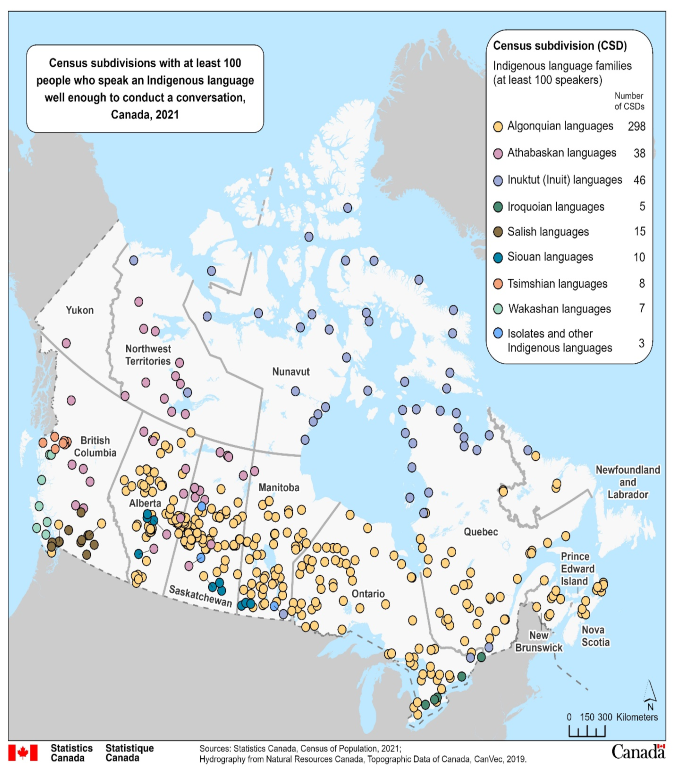
There are over 70 distinct Indigenous languages spoken by First Nations, Inuit, and Métis communities across Canada. These languages belong to several language families, including Algonquian, Athabaskan (Dene), Iroquoian, Inuit, and others. Each language carries unique histories and cultural frameworks. As emphasized in “Message From the Governor General” (2025), Indigenous languages are vital carriers of traditional knowledge and are essential to Canada’s cultural diversity. Recognizing and supporting these languages affirms their place as foundational elements of the country’s national identity.
The historical context surrounding Indigenous language loss in Canada is inseparable from colonization and government assimilation policies. For over a century, the residential school system forcibly removed Indigenous children from their families and communities. Within these institutions, children were prohibited from speaking their languages and were often punished for doing so. This deliberate suppression aimed to sever cultural ties and accelerate assimilation into Euro-Canadian society. The consequences were devastating: intergenerational trauma, erosion of cultural identity, and significant declines in language transmission.
Research continues to document the long-term impacts of residential schools, including increased rates of mental health challenges, substance use, and suicide in communities where language and cultural continuity were disrupted. Language loss was not incidental; it was central to the colonial project. Revitalizing Indigenous languages, therefore, represents more than cultural preservation—it is an act of healing, empowerment, and resistance. As noted by the University of Alberta (2022), Indigenous languages are currently in crisis; however, revitalization efforts led by communities themselves demonstrate remarkable resilience and potential for renewal.
The Government of Canada has taken legislative steps toward supporting language revitalization, including the Indigenous Languages Act, which affirms that Indigenous languages are fundamental to Indigenous identity and culture, and recognizes the federal government’s role in supporting their reclamation and maintenance.
On National Indigenous Languages Day, the Office of the Commissioner of Indigenous Languages, in collaboration with Statistics Canada, is releasing nine new reports examining Indigenous language families across Canada. Drawing on data from the 2021 Census of Population, these reports provide a detailed analysis of language vitality, acquisition, and patterns of use among Indigenous communities. This evidence-based initiative marks an important step toward strengthening national understanding of the current state of Indigenous languages.
The reports support the implementation of the Indigenous Languages Act and align with the Commission’s mandate to promote, advocate for, and help revitalize all Indigenous languages in Canada. By working collaboratively with Statistics Canada, the Commission aims to ensure Indigenous Peoples have access to accurate, relevant, and community-informed data. Reliable data is essential for developing effective language policies, securing funding, and guiding community-led revitalization strategies.
Collectively, the nine reports provide insights into eight Indigenous language families, as well as three languages that fall outside these families. They examine key indicators such as language proficiency levels, age distribution of speakers, the presence of “silent speakers” (individuals who understand but do not speak the language), and the frequency of language use in homes and workplaces (Ignace, 2025). By highlighting both strengths and areas of concern, these findings offer valuable guidance for governments, organizations, and communities committed to reclaiming, revitalizing, maintaining, and strengthening Indigenous languages for future generations.
See the reports:
According to Hitchins and Local Journalism Initiative Reporter (2025), revitalization initiatives are being implemented across the country, including support for languages such as Beaver (Dane-zaa), part of the Athabaskan family, which continues to maintain a small but active speaker base in northeastern British Columbia. Such examples illustrate that even languages with limited speakers can experience growth when supported through community-driven initiatives and adequate funding.
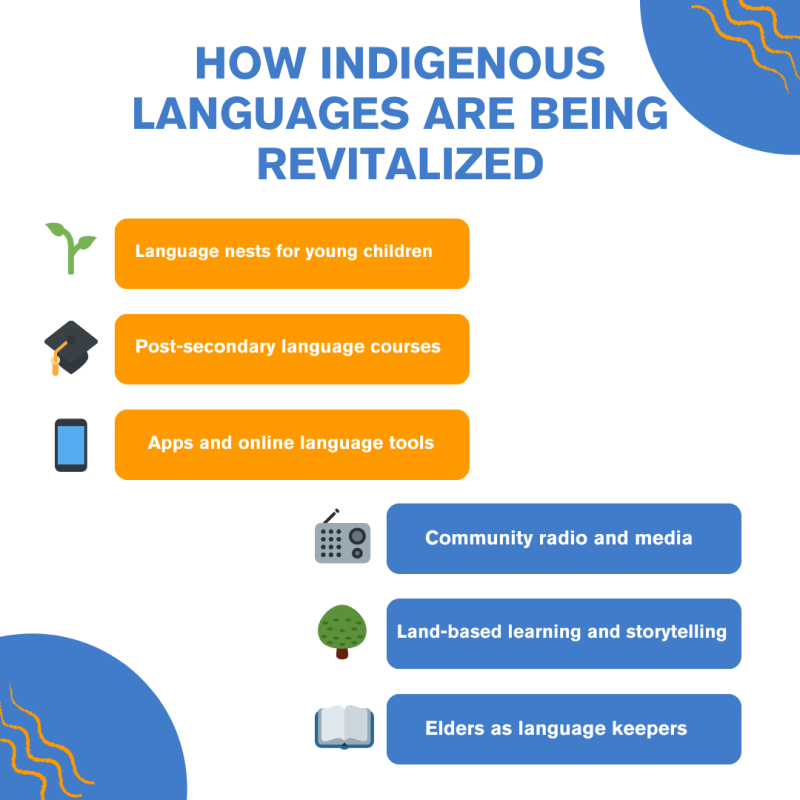
The revitalization of Indigenous languages requires multifaceted strategies. Several increasingly common strategies include community-based immersion programs, language nests for young children, digital applications, radio broadcasting, and post-secondary language courses. Elders play a crucial role in these efforts, serving as knowledge keepers and primary language carriers. Their involvement ensures that revitalization is grounded in cultural protocols, traditional teachings, and community priorities. Language programs that integrate storytelling, land-based learning, and ceremony reinforce the interconnected nature of language and cultural practice.
The personal and symbolic significance of language is further illustrated in “Message From the Governor General” (2025), which highlights Inuktitut as the mother tongue of the Governor General. Inuktitut, widely spoken among Inuit communities, including those in Nunavik in northern Quebec, represents not only communication but also ancestral connection and cultural pride. This acknowledgment reinforces the importance of Indigenous languages at the highest levels of national leadership and public life.
National Indigenous Languages Day also aligns with the International Decade of Indigenous Languages (2022–2032), declared by the United Nations. This global initiative emphasizes the urgent need to protect linguistic diversity and promote the rights of Indigenous Peoples to preserve, revitalize, and transmit their languages. The international recognition of Indigenous language preservation underscores that language loss is not solely a Canadian issue, but part of a broader global pattern rooted in colonial histories.
From a social services perspective, language revitalization is closely connected to community wellness and self-determination. Language fosters belonging, strengthens family relationships, and reinforces cultural pride. Studies suggest that communities with higher levels of language retention often demonstrate stronger social cohesion and improved mental health outcomes. Reclaiming language can restore a sense of identity and provide youth with a stronger foundation of cultural confidence despite disruption. When children learn their ancestral languages, not only do they inherit words, but also values, stories, humour, and collective resilience.
National Indigenous Languages Day serves as both a celebration and a call to action. It encourages Canadians to move beyond symbolic recognition and toward meaningful support. Reconciliation requires active participation and sustained commitment. Supporting Indigenous language revitalization may involve advocating for funding, participating in educational initiatives, amplifying Indigenous voices, and challenging systemic barriers that limit language access in institutions such as schools, healthcare systems, and workplaces.
Educational systems play a particularly important role. Historically, schools were instruments of language suppression. Today, they have the potential to become spaces of language reclamation. Incorporating Indigenous language instruction into curricula, particularly in regions with significant Indigenous populations, affirms the legitimacy and value of these languages. Postsecondary institutions are also expanding Indigenous language programs, contributing to research, teacher training, and curriculum development.
Technology has emerged as an important tool in revitalization efforts. Mobile applications, online dictionaries, virtual classrooms, and social media platforms allow language learners to access resources beyond geographic boundaries. Digital storytelling projects and language archives preserve recordings of fluent speakers for future generations. While technology cannot replace in-person community transmission, it can complement traditional methods and increase accessibility.
Community leadership remains central to successful revitalization. Indigenous communities determine their own language priorities, teaching approaches, and cultural protocols. External support must be respectful, collaborative, and guided by Indigenous self-determination. As emphasized by the University of Alberta (2022), respectful partnerships between governments, institutions, and communities are crucial for sustaining long-term progress.
The significance of National Indigenous Languages Day extends beyond Indigenous communities. It invites all Canadians to recognize the linguistic richness that predates Confederation and to acknowledge the harms inflicted through assimilation policies. It also challenges dominant narratives that have historically marginalized Indigenous voices. By elevating Indigenous languages, Canada affirms a more inclusive and accurate understanding of its identity.
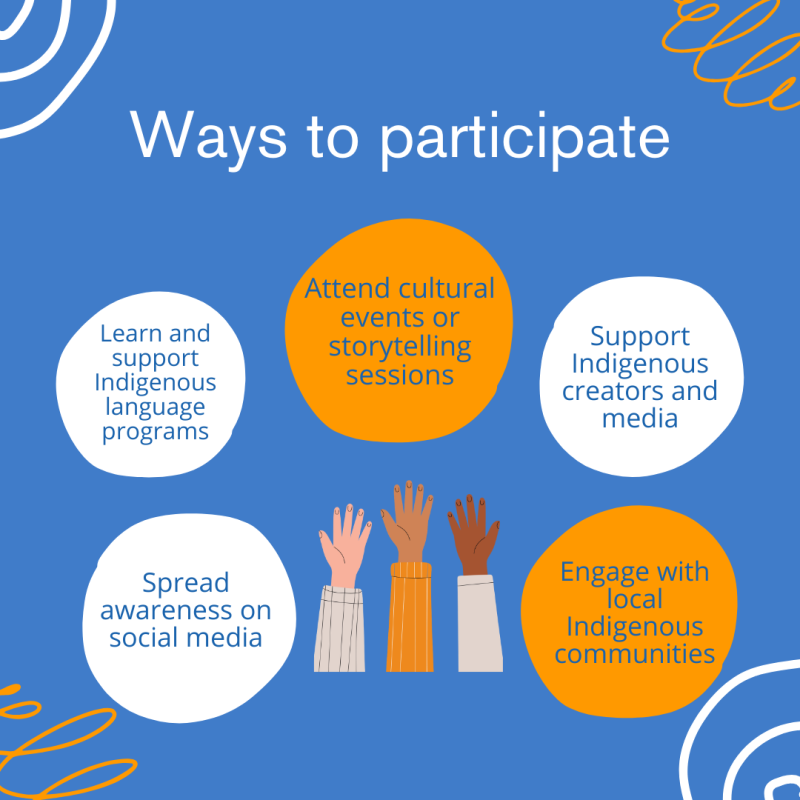
Ways to participate:
- Learn or support Indigenous languages: Engage with online resources, language courses, or community-led programs.
- Attend cultural events: Participate in storytelling sessions, ceremonies, or workshops celebrating Indigenous languages and heritage.
- Support Indigenous creators: Read literature, view artwork, or engage with media that incorporates Indigenous languages.
- Spread awareness: Use social media campaigns such as #ReconciliACTION to promote language preservation and reconciliation efforts.
- Community Engagement: Engage with local Indigenous communities to learn about their languages and cultures. This can foster understanding and appreciation for the diversity of Indigenous languages across Canada.
Small actions, when collectively embraced, contribute to broader societal change.
Additional Ressources
- Inspired by Chanie’s story and Gord’s call to build a better Canada, the Gord Downie & Chanie Wenjack Fund (DWF) aims to build cultural understanding and create a path toward reconciliation between Indigenous and non-Indigenous peoples. Home – The Gord Downie & Chanie Wenjack Fund
- Watch the Ted Talk ‘Canada needs thriving Indigenous languages’. Canada Needs Thriving Indigenous Languages | Khelsilem | TEDxWestVancouverED
- Why Indigenous Languages Matter and What We Can Do to Save Them | Lindsay Morcom | TEDxQueensU
- Learn about the status of First Nations Languages in BC. Status of B.C. First Nations Language – First Peoples Cultural Council
Conclusion
Ultimately, National Indigenous Languages Day represents hope and resilience. Despite the severe impacts of colonization, Indigenous languages continue to endure. Elders, educators, youth, and community leaders are breathing new life into ancestral words and ensuring that they are spoken in homes, schools, and gathering places. These efforts reaffirm that language is not merely a relic of the past but a living, evolving expression of identity.
As Canada continues its journey toward reconciliation, protecting and revitalizing Indigenous languages must remain a national priority. Language preservation strengthens cultural continuity, supports community wellness, and honours the inherent rights of Indigenous Peoples.
National Indigenous Languages Day serves as a reminder that reconciliation is not a single event but an ongoing commitment. By supporting Indigenous language revitalization, Canadians contribute to a future in which linguistic diversity thrives, and Indigenous voices remain strong for generations to come.
References
Hitchins, E., & Local Journalism Initiative Reporter. (2025, March 31). Language research released for National Indigenous Languages Day. The Canadian Press. https://www.proquest.com/wire-feeds/language-research-released-national-indigenous/docview/3185364754/se-2
Message from the Governor General on the occasion of National Indigenous Languages Day. (2025, March 31). Canada NewsWire. https://www.proquest.com/wire-feeds/message-governor-general-on-occasion-national/docview/3183626600/se-2
Office of the Commissioner of Indigenous Languages. (2025). National Indigenous Languages Day: Bringing our Languages out of the Shadows and into the Light. Commissionforindigenouslanguages.ca. https://commissionforindigenouslanguages.ca/commission-activities/national-indigenous-languages-day-bringing-our-languages-out-of-the-shadows-and-into-the-light/
University of Alberta. (2022, March 31). National Indigenous Languages Day: Keeping languages thriving for generations to come. The Canadian Press. https://www.proquest.com/wire-feeds/national-indigenous-languages-day-keeping/docview/2646157730/se-2